 EN

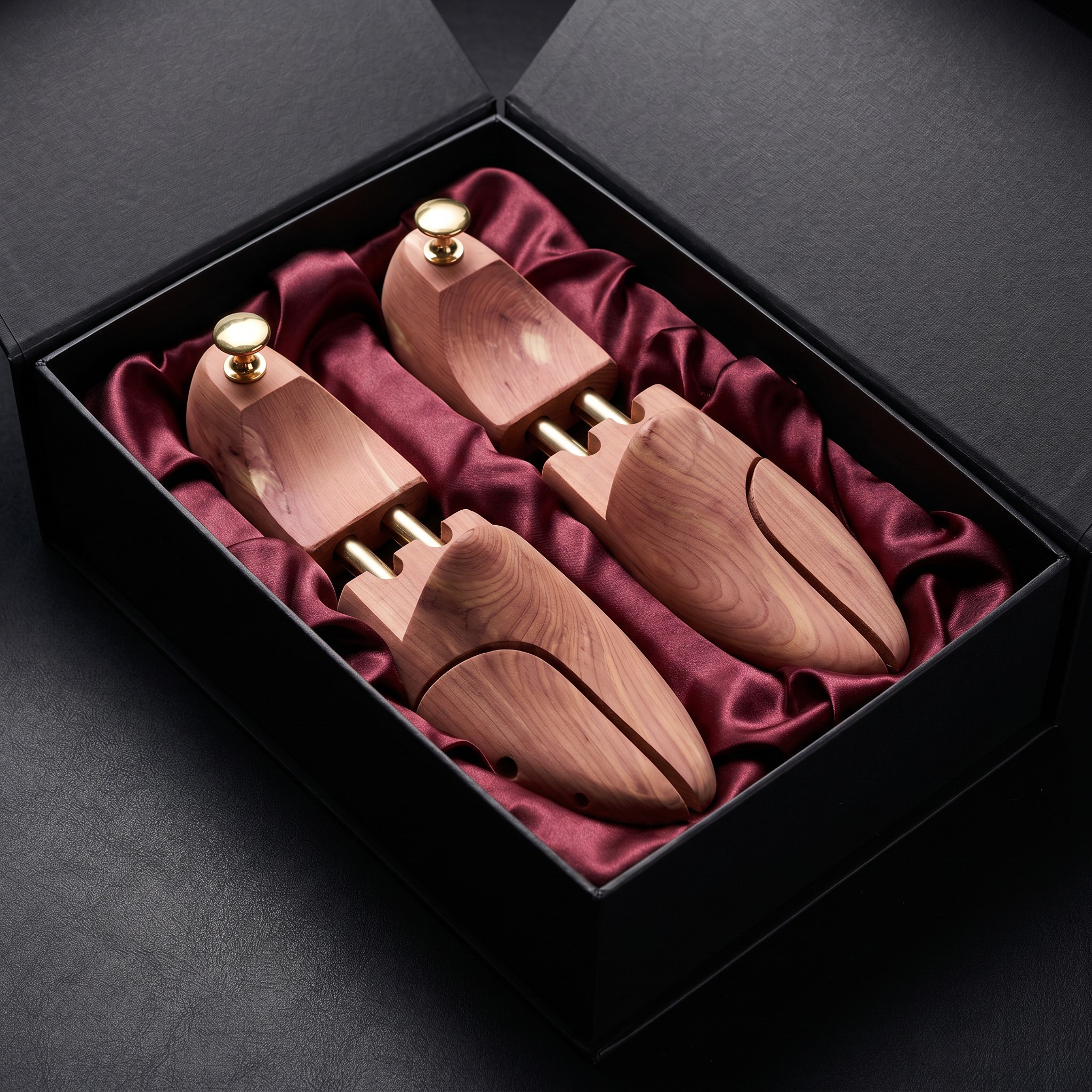
Prioritize Premium, Breathable Wood Materials for Long-Term Performance
Wood selection directly determines the lifespan and functional integrity of a wooden shoe tree. For bulk orders, buyers must move beyond generic “wood” and specify species that offer active moisture management and structural resilience. The cellular structure of the material dictates how effectively it absorbs perspiration and maintains the shoe’s original shape over years of daily use.
Cedar vs. Beechwood: Comparing Moisture Absorption, Crack Resistance, and Structural Stability in Wooden Shoe Tree Production
The choice between cedar and beechwood represents a fundamental performance trade-off. Aromatic red cedar, a softwood, excels in moisture control due to its high porosity, allowing it to wick perspiration from leather linings within hours—critical for preventing salt crystal buildup that degrades leather fibers. However, cedar’s softer Janka hardness rating (~900 N) makes it more susceptible to heel indentations and edge chipping during repeated insertion. In contrast, steamed beechwood is a diffuse-porous hardwood with a Janka rating often exceeding 1,300 N. Its dense grain structure provides superior crack resistance and dimensional stability, ensuring toe and heel blocks maintain spring tension without warping. A leading supplier analysis found beechwood components exhibit a 40% lower failure rate in high-volume retail environments compared to cedar. For premium applications, many manufacturers now source quarter-sawn beechwood to combine controlled grain orientation—enhancing hygroscopic response—with the durability required for lasting performance.
| Feature | Aromatic Cedar | Steamed Beechwood |
|---|---|---|
| Primary Benefit | High moisture absorption & odor control | Structural integrity & crack resistance |
| Hardness (Janka) | ~900 N (Soft) | >1,300 N (Hard) |
| Moisture Wicking | Rapid, passive capillary action | Moderate, dependent on grain finishing |
| Long-Term Risk | Surface denting, block compression | Reduced active odor neutralization |
| Ideal Application | High-end retail, direct consumer use | High-volume commercial, lasting springs |
Why Uncoated, Natural Wood Is Essential for Footwear Fit Retention and Odor Control
A wooden shoe tree must function as a breathable interface—not a sealed plug. Lacquers, varnishes, and synthetic coatings create a non-porous barrier that traps moisture inside the leather, accelerating breakdown of the shoe’s toe box fiberboard. Raw, unfinished wood enables continuous passive air exchange. Its natural hygroscopic property allows it to absorb over 14% of its weight in atmospheric moisture, micro-regulating the internal shoe environment and physically removing sweat—the primary mechanism for odor control (Journal of Wood Science, 2022). A smooth, sanded-but-unsealed surface also delivers gentle friction to hold the heel in place without adhering to the lining. Even thin sealants can become tacky after prolonged contact with leather conditioners, risking upper deformation. Bulk specifications should therefore mandate fine-grit sanding—not coating—to preserve the wood’s natural ability to retain fit and extend service life.
Demand Precision Engineering and Last-Matched Design for Consistent Fit at Scale
For bulk wooden shoe tree orders, precision engineering ensures each unit mirrors the exact last shape of the footwear, preventing distortion over time. Two critical factors—lasted profiles and CNC machining tolerances—directly influence how effectively a shoe tree preserves fit in large-scale storage.
Lasted Wooden Shoe Tree Profiles vs. Generic Shapes: Impact on Shoe Deformation Prevention in Bulk Use
A lasted wooden shoe tree is milled to replicate the original shoe last; generic shapes follow a one-size-fits-all contour. The difference in deformation prevention is striking: a 2023 study by the International Footwear Preservation Council found lasted profiles reduce toe spring deformation by 34% compared to generic shapes after 500 storage cycles. In bulk settings—warehouses storing 5,000+ pairs—this precision ensures consistent fit retention. Retailers report up to a 20% reduction in return rates from misshapen shoes, as the tree’s exact profile maintains toe spring, heel line, and vamp shape. Generic shapes, by contrast, create uneven pressure points that accelerate leather creasing and distort silhouette, especially during long-term storage.
| Feature | Lasted Profile | Generic Shape | Long-Term Deformation Risk |
|---|---|---|---|
| Toe spring | Maintains original curvature | Gradually flattens | High |
| Heel height | Preserves heel seat angle | Allows heel collapse | Medium |
| Width fit | Matches shoe widening pattern | Forces unnatural stretching | Low |
CNC Machining Tolerances (±0.3mm) vs. Manual Turning: Ensuring Uniformity Across 5,000+ Units
CNC (Computer Numerical Control) machining delivers a tolerance of ±0.3mm, while manual turning fluctuates between ±1.0mm and ±2.0mm. A 2022 quality analysis by a leading woodworking machinery institute showed CNC-produced shoe trees maintained dimensional consistency across 10,000 units with a defect rate of just 0.5%, versus 3% for manual methods. This precision eliminates fit inconsistencies that, in manual turning, can lead to shoe damage from undersized or oversized trees. Reliable manufacturers use CNC lathes to guarantee every unit in a bulk order matches the client’s last dimensions—translating directly into fewer customer complaints and lower warranty claims for B2B buyers.
| Production Method | Typical Tolerance | Uniformity Across 5,000 Units | Typical Defect Rate |
|---|---|---|---|
| CNC Machining | ±0.3mm | 99.5% within specification | Less than 0.5% |
| Manual Turning | ±1.5mm | 85% within specification | Approximately 3% |
Validate Ethical Sourcing, Certifications, and End-to-End Traceability
PEFC/FSC Certification, Biomass Reuse Protocols, and Batch-Level Documentation for Sustainable Wooden Shoe Tree Supply Chains
Verifiable sustainability credentials are non-negotiable when sourcing wooden shoe trees at scale. Demand PEFC (Programme for the Endorsement of Forest Certification) or FSC (Forest Stewardship Council) chain-of-custody certification, which confirms timber originates from responsibly managed forests. Equally important are biomass reuse protocols—manufacturers that repurpose wood offcuts and sawdust for heating or packaging reduce landfill waste and lower the carbon footprint per unit. Batch-level documentation completes the transparency picture: it should link every shipment to a specific timber lot, mill date, and certification number. This audit-ready trail supports ESG reporting and verifies that your supply chain is free from illegal logging and exploitative labor—building trust with retailers and consumers who increasingly scrutinize the environmental story behind every product.
Audit Supplier Capabilities: MOQ Flexibility, Lead Time Reliability, and B2B Support Infrastructure
Before placing a bulk order for wooden shoe trees, assess the supplier’s operational flexibility. MOQ (Minimum Order Quantity) requirements vary significantly—some manufacturers demand 10,000 units, while others accommodate 500. A lower MOQ can reduce inventory risk during seasonal demand shifts, but verify that per-unit pricing remains competitive at scaled volumes. Ask for documented capacity plans and confirm whether the factory can absorb a 30% order surge without compromising deadlines.
Lead time consistency is equally critical. In the footwear industry, a two-week delay can disrupt retail launches. Evaluate the supplier’s raw wood sourcing strategy, machinery uptime, and logistics partnerships. According to a 2023 procurement survey, 47% of B2B buyers flagged inconsistent lead times as a primary supply chain risk. Request a six-month delivery history and check for on-time performance rates above 95%. A table comparing supplier lead time guarantees clarifies trade-offs:
| Supplier Tier | Average Lead Time | Delivery Reliability | Surge Capacity |
|---|---|---|---|
| Mid-size plant | 15–20 days | 92% on-time | 20% flex |
| Large-scale manufacturer | 7–12 days | 98% on-time | 50% flex |
Beyond production metrics, examine the B2B support infrastructure. A dedicated account manager, real-time order tracking, and a multilingual technical team are not luxuries—they are necessities. Probe how the supplier handles quality disputes, packaging customization, and documentation for customs clearance. A supplier with ISO 9001 certification and a post-sales feedback loop is more likely to evolve with your business needs. Prioritize partners that treat the relationship as a long-term collaboration, not a one-time transaction.
Frequently Asked Questions (FAQ)
What type of wooden material is best for shoe trees?
Aromatic cedar is ideal for moisture absorption and odor control, while steamed beechwood excels in structural stability and crack resistance.
Why is natural, uncoated wood preferred for shoe trees?
Uncoated wood allows continuous air exchange, prevents toe box fiberboard breakdown, and promotes long-term odor control.
What is the benefit of CNC machining for shoe tree production?
CNC machining ensures dimensional precision (±0.3mm), reduces defect rates, and maintains uniformity across bulk orders.
How does PEFC/FSC certification improve wooden shoe tree sourcing?
These certifications confirm ethical forestry practices and ensure traceable, sustainable supply chains free from illegal logging.
What should I assess before choosing a wooden shoe tree supplier?
Evaluate MOQ flexibility, lead time reliability, B2B support infrastructure, and documentation capabilities for quality assurance.
Table of Contents
- Prioritize Premium, Breathable Wood Materials for Long-Term Performance
- Demand Precision Engineering and Last-Matched Design for Consistent Fit at Scale
- Validate Ethical Sourcing, Certifications, and End-to-End Traceability
- Audit Supplier Capabilities: MOQ Flexibility, Lead Time Reliability, and B2B Support Infrastructure
-
Frequently Asked Questions (FAQ)
- What type of wooden material is best for shoe trees?
- Why is natural, uncoated wood preferred for shoe trees?
- What is the benefit of CNC machining for shoe tree production?
- How does PEFC/FSC certification improve wooden shoe tree sourcing?
- What should I assess before choosing a wooden shoe tree supplier?