 EN

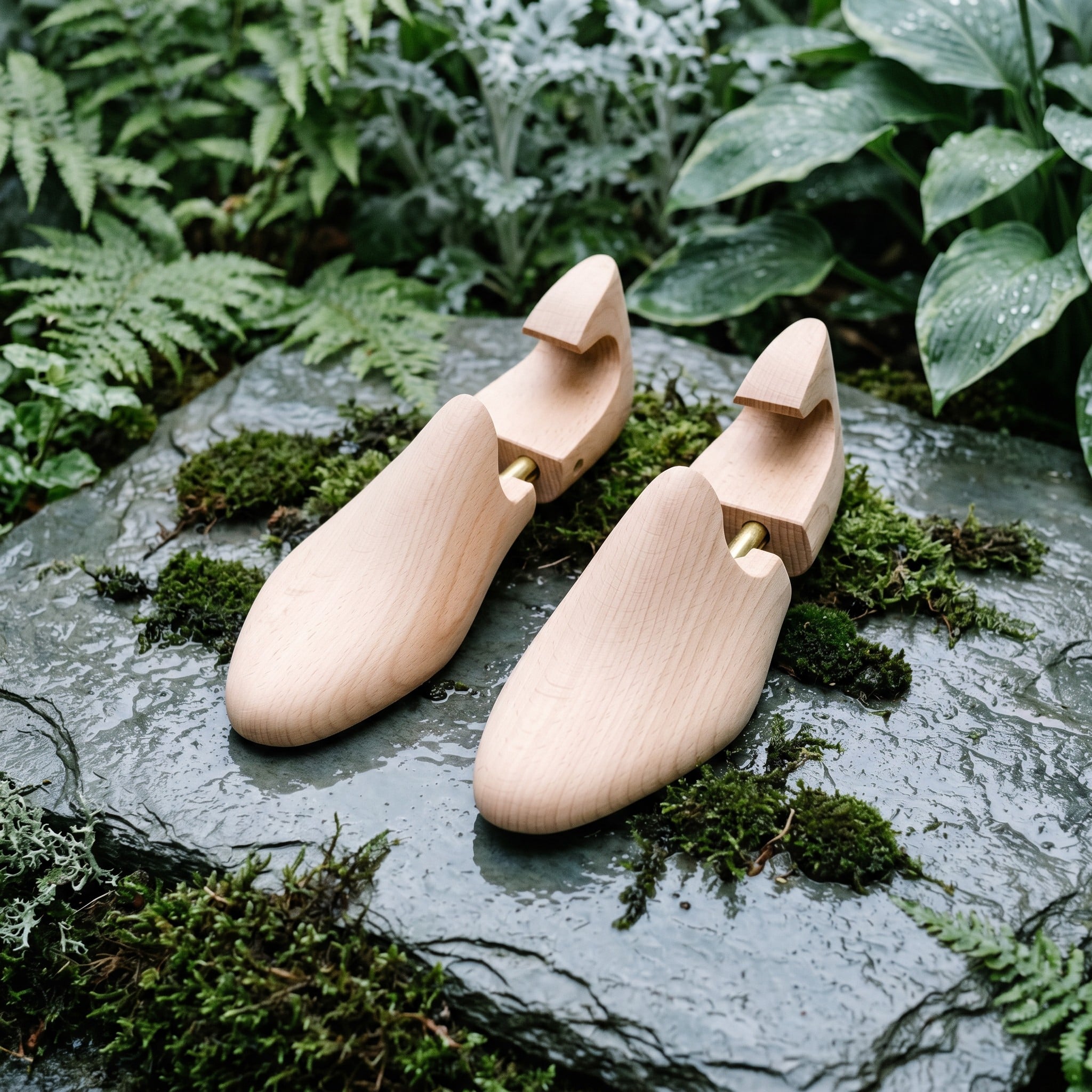
Why Beech Wood Is the Optimal Material for Long-Lasting Beech Shoe Trees
Density, Fine Grain, and Low Shrinkage Ensure Structural Stability
Beech wood’s longevity begins with its exceptional density—measured at 1,300 lbf on the Janka hardness scale (The Wood Database, 2023). This hardness resists compressive deformation during daily insertion, preventing permanent dents that compromise fit. Its tight, uniform grain distributes pressure evenly across the shoe’s interior, averting localized leather distortion that leads to loss of shape over time. Equally important is beech’s low shrinkage: after conditioning to 12% moisture content, it exhibits just 11.0% tangential shrinkage (USDA Forest Products Laboratory, 2010). This dimensional stability ensures the tree retains its precise contours despite seasonal humidity shifts—unlike softer woods that swell and contract enough to strain seams or loosen tension. The result is consistent mechanical support across thousands of insertion cycles, making beech the structural benchmark for premium shoe care.
Natural Tannins and Minimal Hygroscopic Movement Resist Warping in Humidity
Beech’s durability extends beyond mechanics into environmental resilience. Its natural tannins bind water molecules and form a mild antimicrobial barrier, reducing the risk of fungal growth inside stored shoes. More critically, beech exhibits minimal hygroscopic movement: at 60% relative humidity, it reaches equilibrium at ~12% moisture content—and absorbs or releases moisture slowly (USDA Forest Products Laboratory, 2010). This near-static volumetric behavior prevents bowing, twisting, or warping in damp closets—a common failure mode for lesser woods after just a few seasons. Even when inserted into a damp shoe, beech draws moisture without dramatic swelling, maintaining secure heel-and-toe contact and preserving toe spring and counter shape. By combining tannin-based protection with exceptional dimensional fidelity, beech delivers warping resistance that plastic and softer hardwoods cannot match—ensuring long-term protection for high-value footwear.
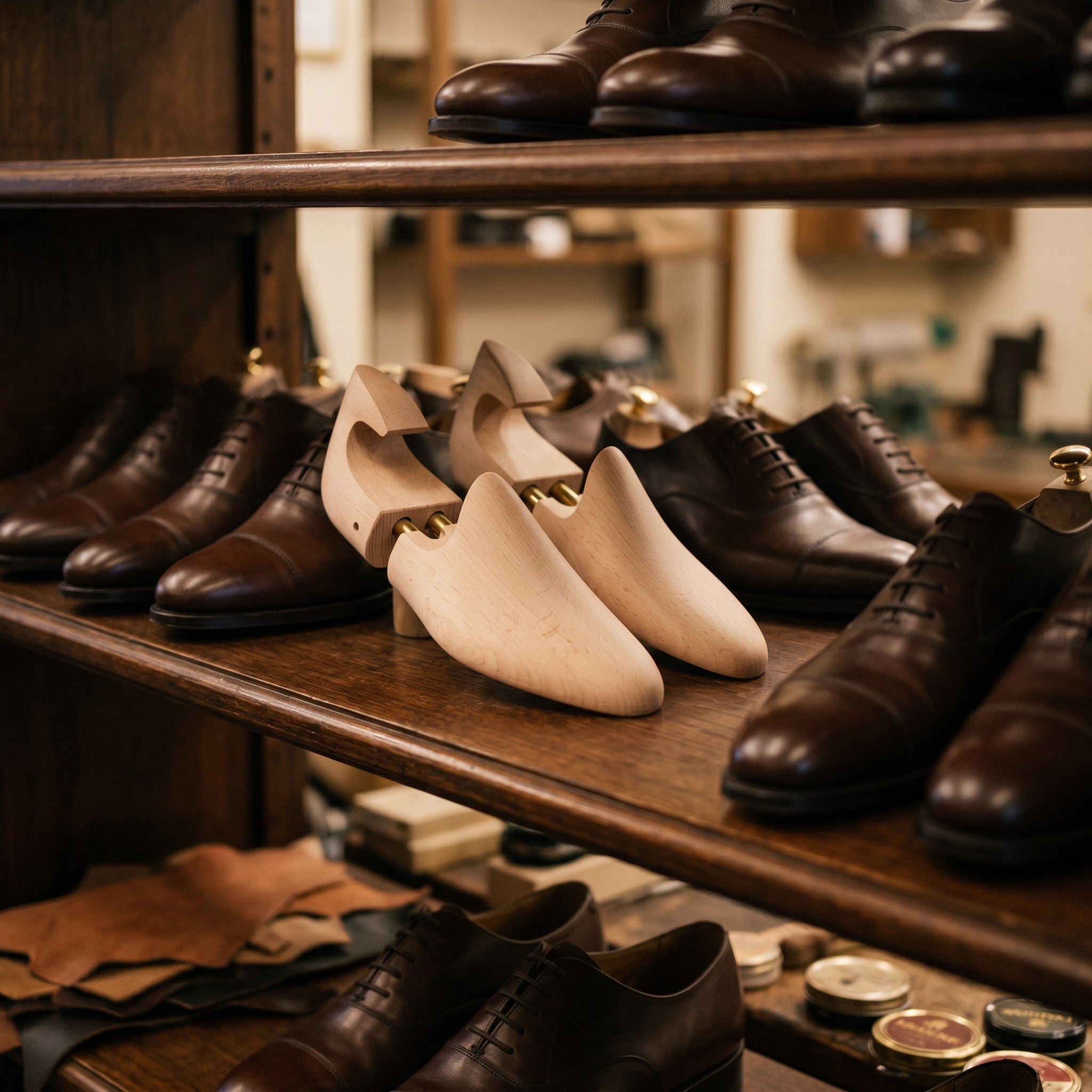
Beech Shoe Tree Durability: Real-World Lifespan and Performance vs. Alternatives
12–15-Year Service Life Outperforms Cedar (7–9 Years) and Superba (10–12 Years)
A beech shoe tree delivers a proven service life of 12 to 15 years under normal use—outpacing cedar (7–9 years) and Superba (10–12 years). This advantage stems directly from beech’s density and homogeneous grain, which resist the gradual compression and dimensional drift that erodes functional tension in softer woods. A shoe tree’s core role is to counteract leather’s natural tendency to curl and collapse as it dries; once cedar’s heel block or toe form begins to compress, its ability to sustain shape degrades measurably. In contrast, beech maintains critical spring-back force for over a decade. Stress-testing data from a leading manufacturer (2021), simulating 15 years of daily use, found beech components retained 94% of original tensile resistance—while comparable cedar units often fell below 70%, resulting in loose fits and diminished upper support.
Superior Impact Resistance: 37% More Insertion/Removal Cycles Before Fatigue
Repeated insertion and removal place intense cyclical stress on the heel block—the most common point of structural failure. Beech’s high modulus of rupture enables it to endure approximately 37% more such cycles before showing fatigue signs like cracking or spring loosening. This stems from its dense, interlocked fiber structure, which dissipates shock energy far more effectively than the coarser, more brittle grain of aromatic cedar. Micro-fractures—often invisible at first—tend to propagate rapidly in cedar under repeated loading, whereas beech’s clean fiber shear resists crack initiation and growth. Field observations consistently show structural cracks concentrated in cedar trees, while beech units remain intact. For the user, this means reliable, unwavering tension from day one through the full lifespan—no sudden heel failure, no compromised support.
Manufacturing Advantages That Maximize Beech Shoe Tree Longevity
Exceptional Machinability Enables Precision Fit and Minimizes Micro-Cracking
Beech’s fine, straight grain and uniform density make it exceptionally machinable—enabling craftsmen to carve contours that precisely mirror a shoe’s last. This precision ensures even pressure distribution across the leather, eliminating high-stress points that cause localized overstretching or deformation. Crucially, beech cuts cleanly rather than tearing, preventing microscopic surface fissures that often go undetected during inspection but widen over hundreds of insertion-removal cycles—eventually triggering structural failure. Preserving internal integrity in this way significantly enhances fatigue resistance. The outcome is a shoe tree that holds its exact shape and functional compression longer than alternatives, reinforcing why beech remains the preferred material for workshops committed to enduring quality.
FAQ
Why is beech wood considered optimal for shoe trees?
Beech wood’s high density, fine grain, low shrinkage, and minimal hygroscopic movement make it extremely stable under mechanical stress and environmental humidity, ensuring long-term durability and functionality.
How long does a beech shoe tree typically last?
Under normal use, beech shoe trees have a proven lifespan of 12–15 years, outperforming alternatives like cedar and Superba.
Does beech wood resist warping in high humidity environments?
Yes, beech wood’s natural tannins and minimal hygroscopic movement prevent warping, bowing, or twisting, even in damp conditions.
What makes beech shoe trees superior to cedar ones?
Beech delivers greater density, structural longevity, and impact resistance, outperforming cedar in both lifespan and resistance to cracking or compression-induced deformation.
Is beech wood easy to machine into shoe trees?
Yes, its fine, straight grain and uniform density allow precise machining without micro-cracking, ensuring a better fit and enhanced fatigue resistance.