 EN

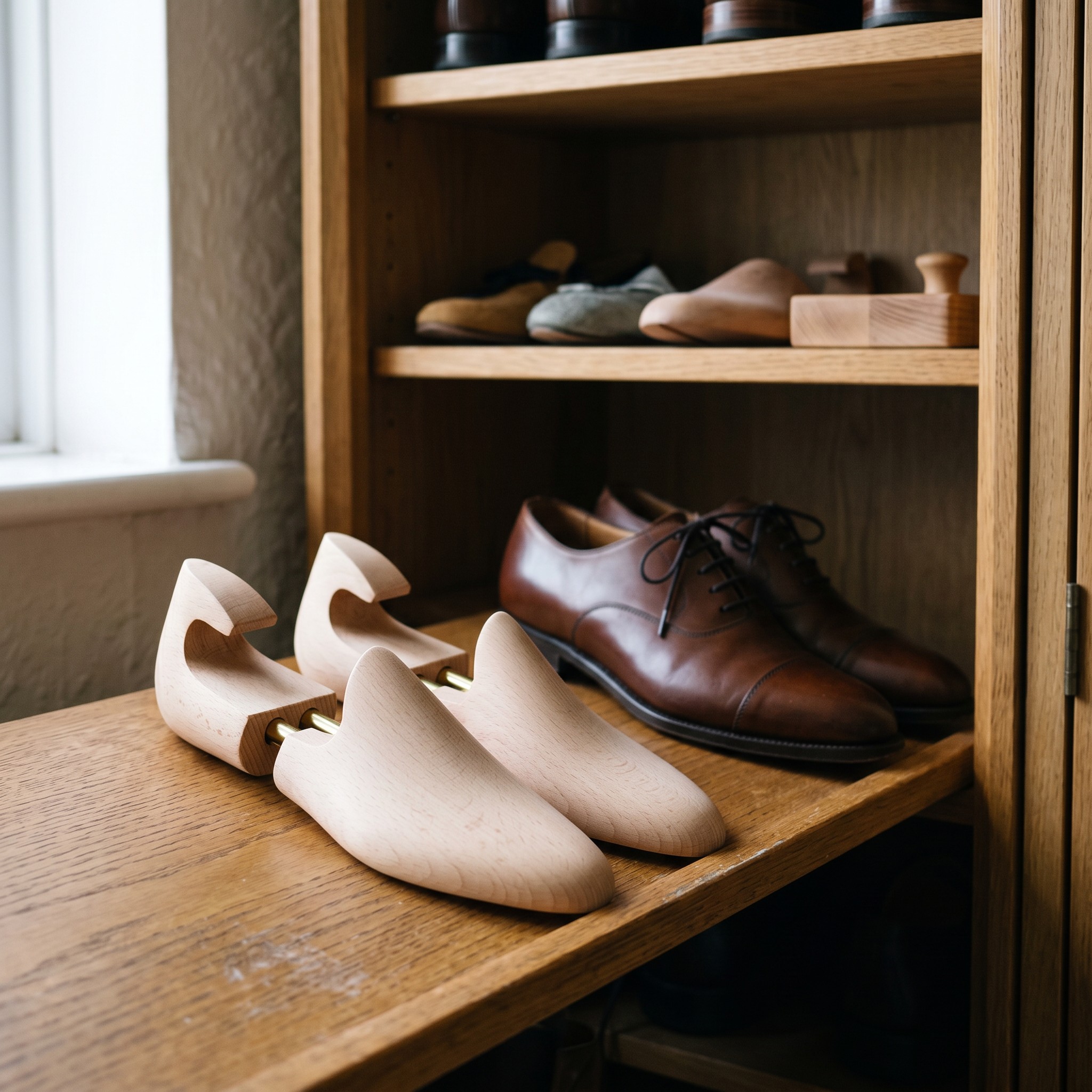
Core Material Properties: Density, Porosity, and Moisture Management
How Cedar’s Low Density and Open Grain Enable Rapid Moisture Absorption
Aromatic Eastern Red Cedar (Juniperus virginiana) excels at moisture management due to its uniquely lightweight yet highly porous structure. With a dry density of 320–380 kg/m³, it features an open grain containing an interconnected network of microscopic voids—functioning like natural capillaries. This low-tortuosity architecture draws perspiration away from leather uppers and insoles via capillary action, accelerating evaporation and often reducing the shoe’s interior moisture content within hours. Its porosity—frequently exceeding 60% by volume in sapwood—provides extensive internal surface area for adsorption. Rapid drying helps preserve leather shape and inhibits bacterial growth responsible for odor, making cedar especially effective for boots and daily-wear footwear exposed to heavy foot perspiration.
Why Beech’s Higher Density Supports Precision Shaping but Limits Capillary Action
European beech (Fagus sylvatica) has a significantly higher density—670–720 kg/m³—nearly double that of cedar. Its compact, closed-grain cellular structure delivers superior hardness and dimensional stability, allowing precisely carved lasts to maintain exact shape under sustained pressure from leather uppers. However, this same tight grain severely restricts capillary movement, limiting both absorption and release of moisture. While beech won’t actively dry shoes as quickly, its rigidity ensures formal footwear like oxfords and loafers retains its silhouette during long-term storage. Its chemical neutrality avoids transferring resin or aroma—ideal for preserving delicate leather linings or accommodating scent sensitivities. In essence, beech prioritizes mechanical fidelity over hygroscopic function, positioning it as the standard for archival-grade shoe care.
Odor Control and Leather Care: Cedar’s Natural Advantages
Thujaplicins in Eastern Red Cedar: Science Behind Antifungal and Deodorizing Effects
Eastern Red Cedar’s odor-fighting capability stems from thujaplicins—naturally occurring tropolone compounds that disrupt microbial cell membranes. These molecules neutralize bacteria and fungi responsible for breaking down sweat into volatile, malodorous byproducts—addressing odor at its source rather than masking it. Crucially, cedar’s open-grain structure enhances this effect by wicking moisture away from leather linings, depriving microbes of the damp environment they require. Research confirms cedar’s volatile oils remain biologically active for years; light sanding can renew surface efficacy when the aroma fades. This synergy—chemical antimicrobial defense paired with physical moisture control—makes Eastern Red Cedar a self-sustaining, long-term solution for maintaining freshness in high-perspiration footwear like daily-wear boots and athletic shoes.
Beech Shoe Tree Limitations for Odor-Prone Footwear—and When Neutrality Is Preferable
Beech offers no inherent antimicrobial activity: its dense, closed-grain structure lacks volatile oils like thujaplicins and contributes minimally to active odor suppression. As a result, it is less suitable for gym shoes, work boots, or any footwear regularly exposed to high moisture and microbial load. Yet this neutrality becomes a distinct advantage for individuals with fragrance sensitivities—or for fine leathers (e.g., cordovan, glove leather) that may react to aromatic compounds. Artisans frequently select beech for formal dress shoes stored in climate-controlled environments, where precise shape retention outweighs deodorizing needs. In such cases, the beech shoe tree functions purely as a structural support—preserving geometry without introducing scent. Pairing it with a separate cedar sachet offers a balanced approach for users seeking form retention without direct wood contact.
Application Mapping: When to Choose a Beech Shoe Tree vs. Cedar
Formal Footwear & Long-Term Storage: Beech’s Dimensional Stability and Carving Fidelity
For high-value formal footwear—particularly cordovan or calfskin oxfords—beech is the material of choice for extended storage. Its density (700–750 kg/m³ in European steamed beech) provides exceptional resistance to compression set, ensuring the shoe tree holds its carved last shape without deformation under leather tension over months. High-fidelity carving allows consistent, targeted pressure against the insole and toe box—preventing upward toe-spring curl and smoothing creases without over-stretching the leather. Though its limited capillary action means slower moisture evacuation, this is rarely a concern in dry, controlled closet environments. Here, dimensional accuracy—not rapid drying—is the priority. Beech’s structural integrity safeguards the meticulous lines and craftsmanship of premium dress footwear.
High-Moisture Environments and Daily Wear: Cedar’s Performance Edge for Boots and Sneakers
Cedar shines in dynamic, high-moisture contexts—from daily commutes to outdoor work. Its low density (350–370 kg/m³) and open-cell structure act as a natural desiccant, absorbing moisture up to 40% faster than denser hardwoods. Given that a typical foot produces ~250 ml of sweat per day, cedar’s rapid wicking helps prevent saline residue buildup that accelerates leather hydrolysis and stitching degradation. Its thujaplicin content adds a second layer of protection by suppressing odor-causing microbes. For rain- or snow-exposed boots, cedar’s porosity supports efficient overnight drying cycles—pulling residual humidity from linings more effectively than alternatives. By contrast, beech retains surface moisture against the insole in damp conditions, increasing risk of salt crystallization and microbial persistence. The table below summarizes key performance differentiators:
| Condition | Cedar Performance | Beech Performance |
|---|---|---|
| Wet Leather (Rain/Snow) | Excellent wicking; rapidly pulls moisture from lining. | Poor capillary action; moisture stays on surface. |
| Heavy Perspiration | High absorption capacity; reduces saline damage to leather. | Low absorption; salt residues may crystallize on the wood. |
| Odor Neutralization | Natural antifungal and deodorizing properties via thujaplicins. | Neutral material; requires an external deodorizing agent. |
| Shape Retention (Damp) | Maintains form but experiences slight dimensional creep when saturated. | Holds precise dimensions due to higher structural stability. |
FAQ
What makes cedar better for moisture management in shoe trees?
Cedar’s low density and open grain structure enable it to absorb and wick moisture rapidly. Its natural capillary action and porosity make it ideal for drying shoes exposed to sweat or dampness, while also reducing odor with its antifungal thujaplicins.
Why is beech considered better for formal footwear?
Beech’s high density and closed-grain structure offer exceptional dimensional stability, making it ideal for preserving the shape of premium dress shoes during long-term storage. Its neutrality and lack of aromatic oils also avoid any potential impact on fine leathers.
Can cedar shoe trees be used with delicate leather shoes?
Yes, but delicate leather may sometimes absorb cedar’s scent. For sensitive applications, pairing a neutral beech shoe tree with a separate cedar sachet can achieve balanced moisture and odor management.
Does beech help control odor in shoes?
No, beech lacks the antifungal and deodorizing properties of cedar. It is better suited for shape retention rather than active odor and moisture management.
How can I restore the effectiveness of cedar shoe trees?
To refresh cedar’s antifungal and deodorizing properties, lightly sand the surface of the shoe tree to release fresh aromatic oils trapped in the wood.