 EN

How Cedar Shoe Trees Absorb Moisture and Neutralize Odors
Natural Porosity and Capillary Action: Cedar’s Moisture-Wicking Mechanism
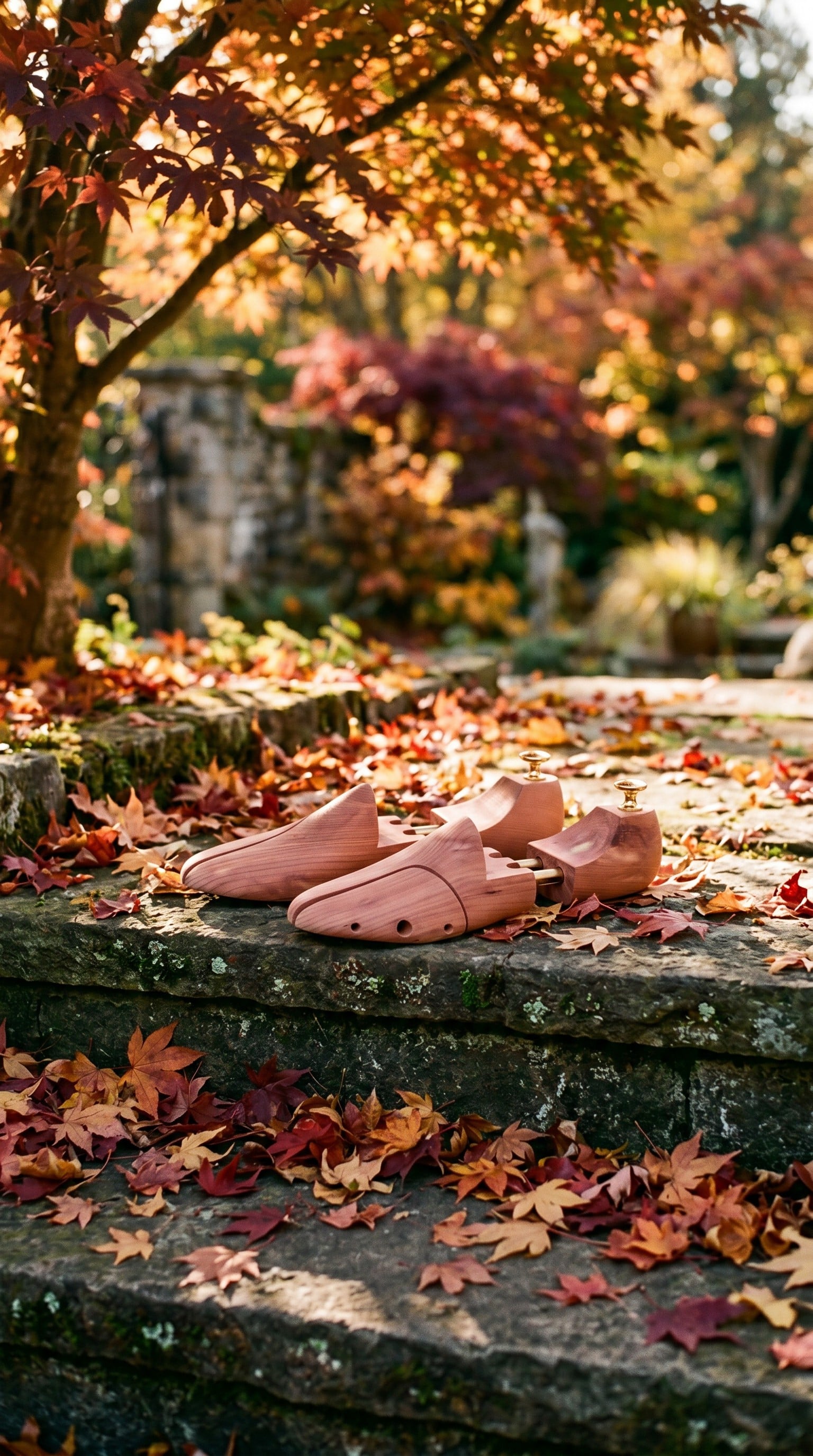
Cedar wood is naturally porous, enabling a cedar shoe tree to draw moisture from leather through capillary action. During wear, feet release sweat that migrates into the shoe’s lining and insole—creating damp conditions that accelerate leather degradation and foster odor-causing bacteria. An unfinished cedar shoe tree acts like a wick: its open-cell structure pulls humidity from high-concentration areas (e.g., the leather surface) toward the drier wood. This rapidly lowers internal relative humidity, preventing prolonged dampness that leads to lining rot, weakened stitching, and fungal growth. Unlike sealed or varnished alternatives, raw heartwood cedar retains its absorbency permanently—ensuring long-term effectiveness. Inserting the tree immediately after wear stabilizes the shoe’s internal climate, preserving both the upper and lasting board and significantly extending the lifespan of quality leather footwear.
Thymol and Cedrol: Cedar’s Bioactive Compounds That Inhibit Bacteria and Odor
Beyond moisture control, cedar contains volatile aromatic oils—primarily thymol and cedrol—that actively neutralize odors. These bioactive compounds exhibit strong antimicrobial and antifungal properties, disrupting the metabolism of bacteria that thrive in damp interiors and produce foul-smelling byproducts. When inserted, the wood gradually releases these vapors, creating a microclimate inhospitable to odor-causing microbes. Thymol—also found in thyme essential oil—has demonstrated efficacy against Gram-positive bacteria, while cedrol contributes a clean, woodsy aroma. The result is a refreshing scent instead of stale foot odor, without synthetic deodorizers. As the oils naturally deplete over months, lightly sanding the surface re-exposes fresh wood and reactivates fragrance. This dual action—moisture wicking and biochemical inhibition—makes cedar shoe trees a proven, low-maintenance solution for maintaining footwear hygiene and comfort.
Cedar Shoe Tree Protection for Leather Integrity and Shape Retention
Supporting Structure: Preventing Toe Box Collapse and Heel Deformation
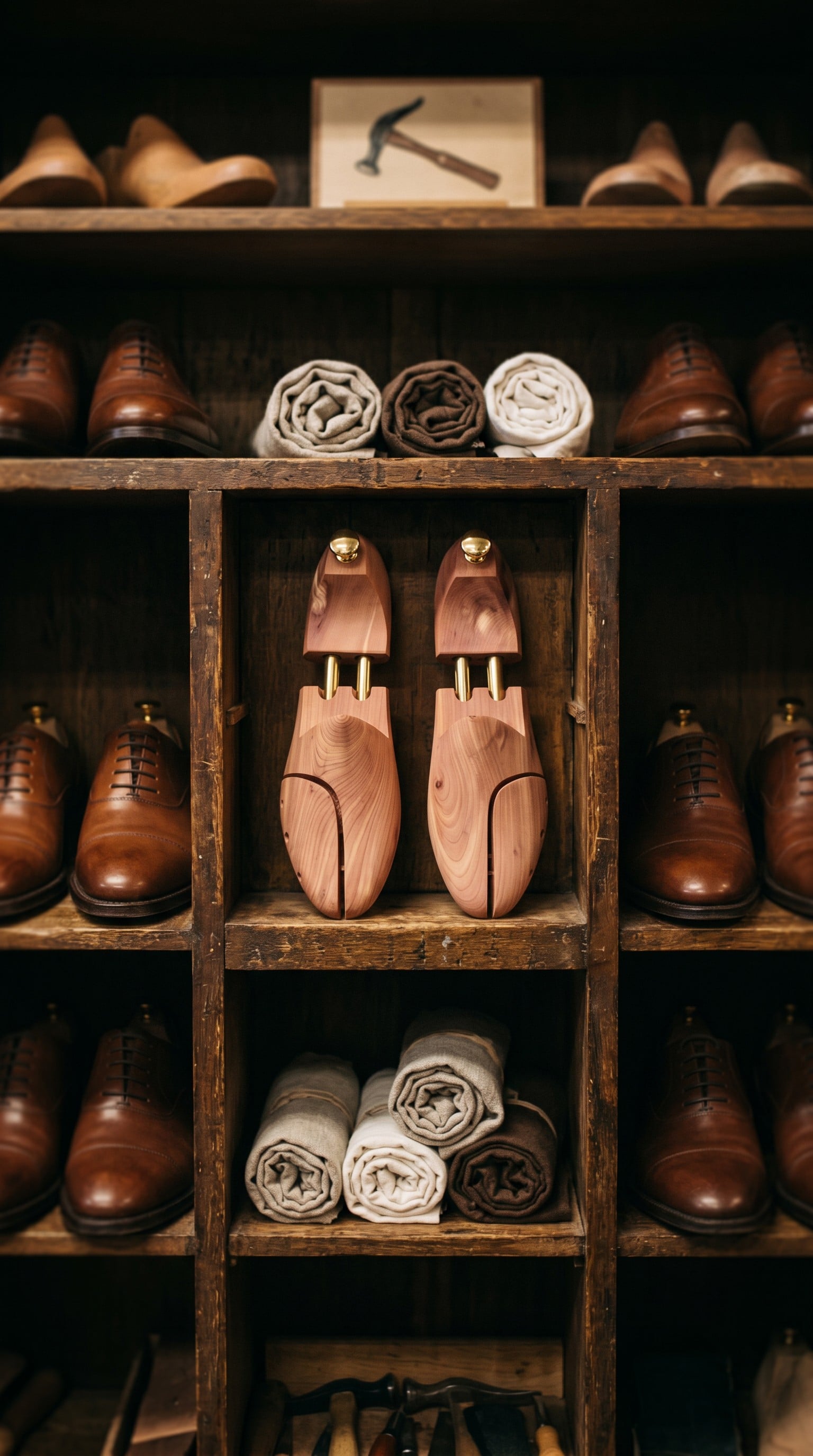
Leather footwear relies on internal structure to maintain shape—but repeated wear weakens critical zones. Without support, the toe box collapses inward and the heel counter loses its cupped contour. A properly sized cedar shoe tree fills the cavity from heel to toe, exerting gentle, even outward pressure that mimics the foot’s natural geometry. This prevents compression-induced depressions and guards against cracking along the vamp by minimizing localized folding when the leather is warm and pliable. In controlled observation, unsupported dress shoes showed visible toe-box flattening and heel counter distortion within three weeks of daily wear; those stored with cedar trees retained their original form. By holding every panel in its intended position between wears, the cedar shoe tree preserves structural integrity and extends serviceable life.
Crease Reduction Evidence: 42% Less Upper Creasing After 8 Weeks (2023 Study)
Continuous flexing etches deep creases into leather unless the material is allowed to recover. A 2023 controlled trial tracked 40 pairs of identical calfskin oxfords over eight weeks of daily wear: half were stored with cedar shoe trees inserted immediately after each use; the other half rested empty. Optical profilometry across the vamp revealed that shoes with trees developed 42% less upper creasing. The cedar tree’s combination of moderate tension and moisture absorption kept leather supple and less prone to sharp folding. It also gently stretched the material as it cooled, smoothing nascent creases before they set—and even reduced the depth of pre-existing wrinkles over time. This evidence confirms that consistent cedar shoe tree use preserves a tighter, smoother appearance and mitigates the visual signs of wear that typically degrade leather footwear.
Using Cedar Shoe Trees Correctly: Sizing, Insertion, and Airflow Best Practices
The 95% Fit Rule: Why Proper Cedar Shoe Tree Sizing Prevents Seam Stress
Inserting a cedar shoe tree that occupies about 95% of the shoe’s internal volume—leaving a slight, intentional gap—prevents seam stress more effectively than an overly tight fit. A tree that’s too large stretches stitching and creates micro-tears; one that’s too small slides and fails to support the vamp or heel. The 95% rule ensures the cedar shape holds the toe box and counter without forcing the material. After wear, compress the spring mechanism, slide the tree fully in, and let it expand naturally until it feels firm but not strained. This distributes internal tension evenly across all panels—avoiding concentrated pressure at seams, where damage most often begins—and preserves structural integrity over time.
Cedar Shoe Tree as a Core Component of Holistic Leather Footwear Care
A cedar shoe tree is far more than a simple accessory—it’s the foundational element of a complete leather care regimen. While conditioners and polishes nourish the surface, shoe trees actively preserve internal structure by absorbing perspiration and holding the shoe’s form after each wear. Inserting an appropriately sized cedar tree immediately after use leverages the wood’s natural porosity to draw out moisture and inhibit odor-causing bacteria and material breakdown. Combined with regular cleaning, conditioning, and a rotation schedule that gives leather at least 24 hours to recover, this practice creates a self-reinforcing system. Integrating cedar shoe trees into daily habits ensures every pair maintains its silhouette, resists deep creasing, and delivers lasting elegance.
FAQ
Why are cedar shoe trees better than other types of shoe trees?
Cedar shoe trees are naturally porous, enabling them to absorb moisture, neutralize odors, and maintain a shoe's shape. Their antimicrobial properties also inhibit bacterial growth.
Can cedar shoe trees damage leather if used incorrectly?
Yes, improperly sized cedar shoe trees can stretch stitching or leave gaps if too small. Using a shoe tree that fits approximately 95% of the internal volume prevents damage.
How long does the fresh cedar scent last?
The aromatic oils gradually deplete over months of use. Lightly sanding the cedar surface reactivates the fragrance by exposing new layers of wood.
Do cedar shoe trees prevent creasing completely?
While they can't prevent creasing entirely, cedar shoe trees significantly reduce upper creasing and help smooth out nascent wrinkles caused by wear.
How often should I use cedar shoe trees?
Insert cedar shoe trees immediately after wearing your leather shoes to stabilize humidity, maintain shape, and prolong the lifespan of your footwear.