 EN

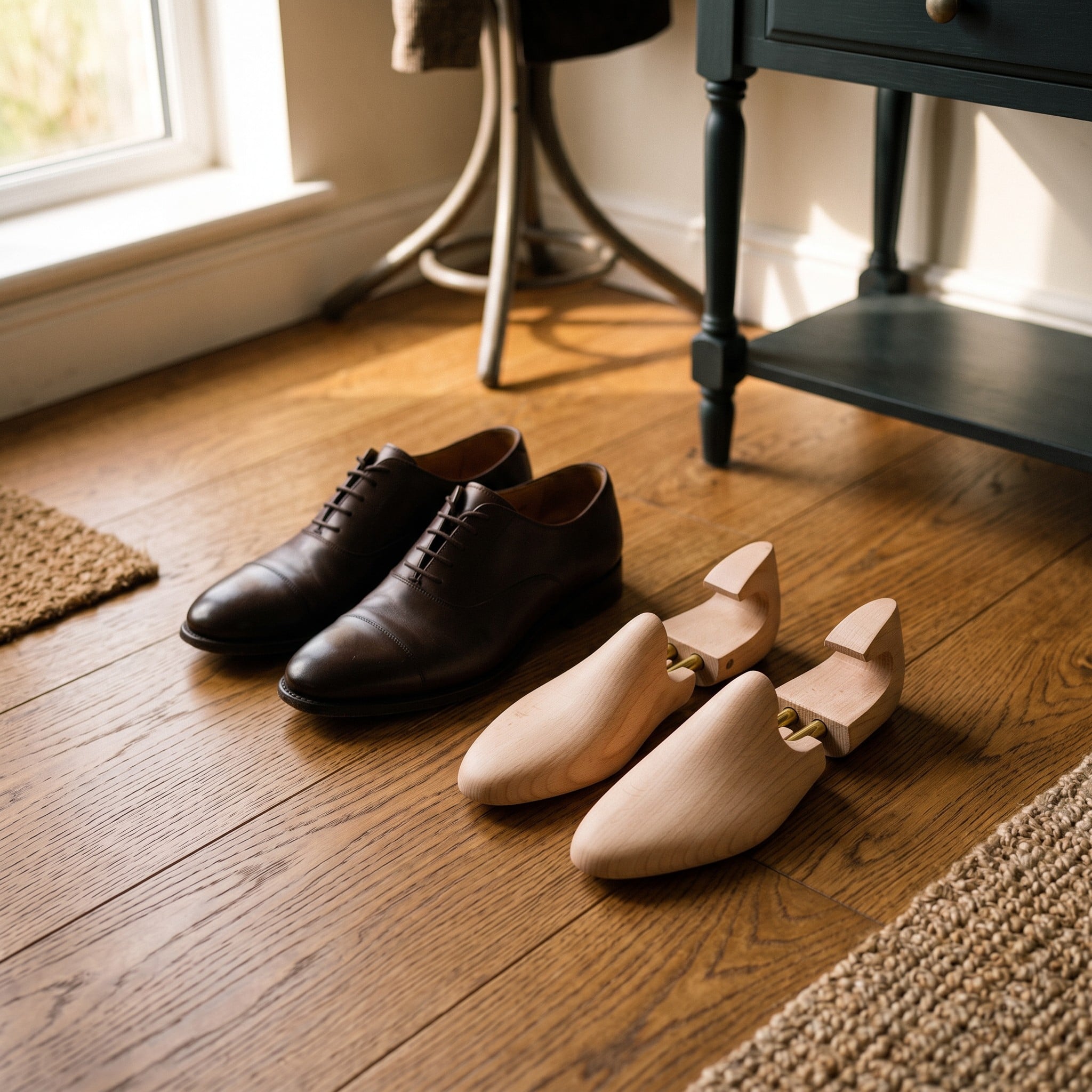
Why Beech Wood Is the Preferred Choice for Premium Custom Beech Shoe Trees
Dimensional Stability and Precision Machinability for Lasted Fit Accuracy
Beech wood’s dense, close-grained structure delivers exceptional dimensional stability—critical for maintaining anatomical accuracy over time. With a density of ~700 kg/m³ and low equilibrium moisture content, beech resists swelling, shrinking, or warping under the humidity fluctuations inside footwear. This inertness ensures the tree’s precise shape—faithfully derived from a bespoke last—remains unchanged for years. On the production floor, beech’s fine, uniform texture enables CNC routers and multi-axis lathes to hold tolerances as tight as ±0.15 mm, cleanly carving subtle contours like the toe box volume, arch support, and heel curve without tear-out or grain fuzz. The result is consistent, gentle pressure exactly where the upper needs reinforcement—preserving crease-free form far longer than softer woods that compress and lose structural memory. For ateliers and brands committed to exacting fit preservation, beech offers unmatched machinability and long-term mechanical fidelity.
Sustainability Credentials: FSC-Certified European Beech and Low-Carbon Processing
European beech stands out for aligning luxury performance with ecological responsibility. Most premium stock comes from Central European forests managed under FSC or PEFC certification—systems designed to maintain biodiversity while ensuring net-carbon sequestration. The wood requires minimal chemical treatment, and kiln drying commonly uses energy recovered from sawmill by-products, significantly lowering its carbon footprint. In contrast, plastic shoe trees rely on fossil-fuel extraction and emit 2–5× more CO₂ per unit mass during production. Leading suppliers often manufacture within the same region as their forest source, shortening transport routes and enabling just-in-time, low-waste fabrication. This closed-loop approach—from sustainably harvested lumber to a durable, biodegradable end-product—meets rising consumer and regulatory expectations for climate-conscious accessories without compromising the precision fit or longevity expected of premium custom shoe trees.
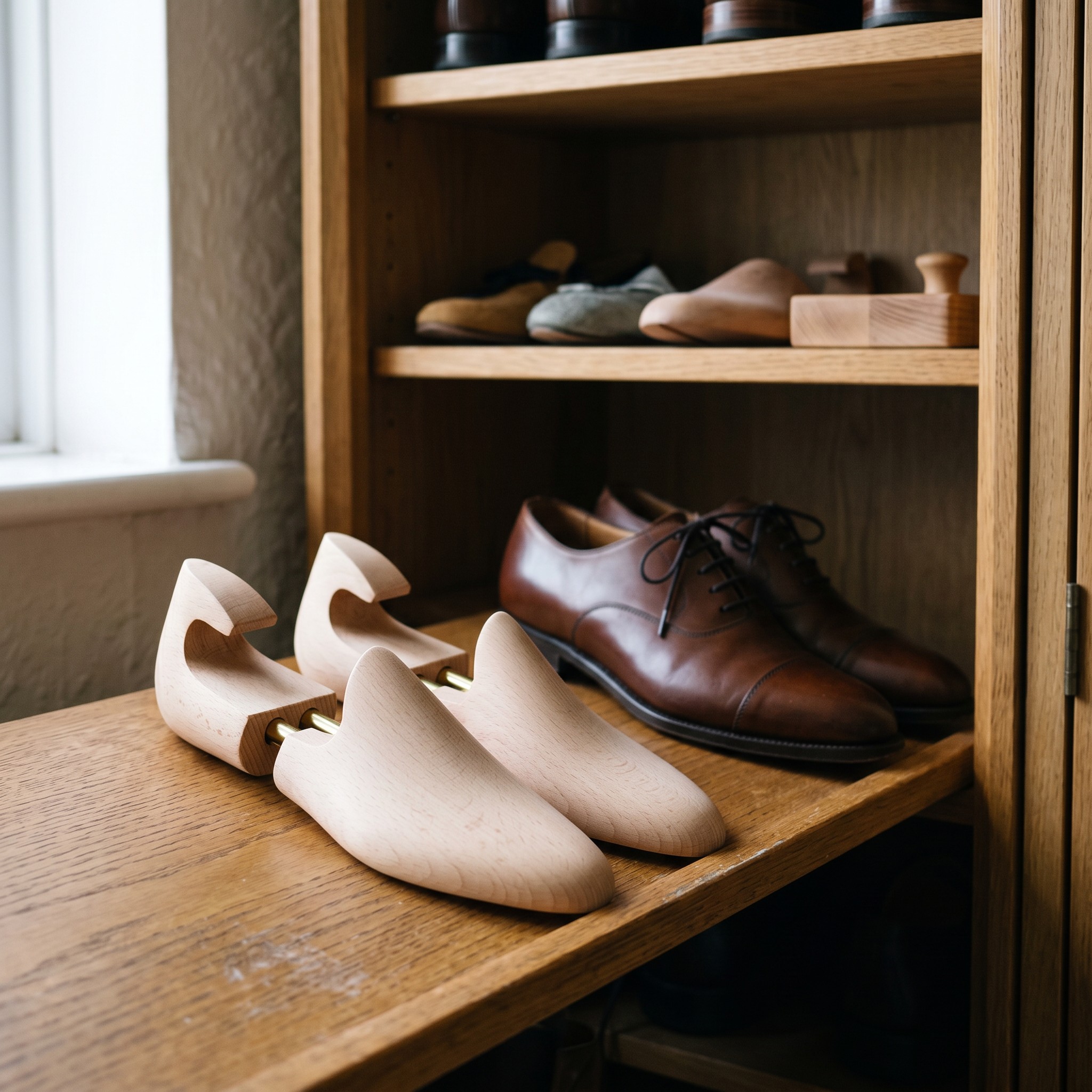
Essential Supplier Qualifications for Custom Beech Shoe Tree Production
Proven CNC Capability with ±0.15mm Tolerance Control for Anatomical Lasting
Precision is non-negotiable—and advanced CNC machining with verified ±0.15 mm tolerance control is the baseline. That tight band directly ensures consistent anatomical fit across multiple pairs; even minor deviations can distort leather over time. A 2023 survey of premium manufacturers found CNC-milled components reduced spring-back deformation by 28% versus hand-carved equivalents, preserving the original last shape through more than 800 insertion cycles. Suppliers must demonstrate multi-axis capability to replicate complex contours—including high arch support and tapered toe boxes—without secondary hand finishing. Critically, their process should include in-line laser measurement and statistical process control to validate every unit against specification. High-speed spindles and vacuum workholding further minimize burn marks and tear-out on beech grain, yielding a smooth, sanding-ready surface. Always request capability studies or first-article inspection reports—not just machine specs—to confirm real-world consistency.
End-to-End Traceability: From Forest-Sourced Beech to Finished Shoe Tree
Traceability safeguards brand integrity and supports ESG compliance. A qualified supplier provides full chain-of-custody documentation linking each beech shoe tree to its forest of origin. In certified European forests, sustainable yield plans govern harvests—and data from a 2022 timber trade audit showed robust traceability systems reduced infiltration of non-certified wood by 62%. Their system must log batch-level data—species, harvest coordinates, kiln-drying temperature curves, and moisture content—at every stage through final packaging. This transparency supports both consumer storytelling and rapid root-cause analysis: if a quality issue arises, the exact processing lot can be isolated in hours. Digital traceability platforms—such as QR-coded trees—allow instant verification of sustainability claims, simplifying internal audits and reinforcing your commitment to responsible sourcing.
Evaluating Beech Against Alternatives in Bespoke Footwear Applications
Cedar vs. Beech: Aroma and Moisture Absorption Versus Structural Fidelity and Durability
Cedar offers aromatic appeal and moisture-wicking properties—but at the expense of long-term shape retention. Beech, by contrast, delivers superior structural fidelity thanks to its dense, closed-grain composition and Janka hardness of ~1,300 lbf—nearly triple cedar’s 500 lbf. That hardness translates directly into resistance to dents and wear, even after repeated insertion into snug lasts. While cedar can warp or crack in dry environments, beech’s dimensional stability keeps the tree firmly locked in the shoe’s original contours. Moisture management also differs: cedar absorbs and retains humidity, risking expansion; beech’s low permeability limits swelling, preserving form. Over a decade of use, beech maintains the millimeter-perfect fit essential for bespoke lasts—whereas cedar often relaxes its grip and requires replacement. When every detail matters, beech’s durability and inertness make it the trusted foundation.
When Hybrid or Composite Solutions Make Sense for High-Volume Custom Programs
For programs producing thousands of custom pairs annually, a fully beech construction may exceed budget constraints. Hybrid designs strategically place beech only in high-stress, high-precision zones—the toe block and heel cup—while using polymer or lightweight metal springs for the shaft. These composites reduce material costs by up to 35% without sacrificing the anatomical hold customers expect. They also accelerate drying cycles when paired with quick-release mechanisms—enhancing throughput for large-scale custom fulfillment.
Streamlining Collaboration with Your Beech Shoe Tree Supplier
Effective collaboration minimizes delays and ensures anatomical precision. Begin by sharing complete technical documentation—CAD files of the last, surface finish targets, and tolerance specifications—before prototyping. Use a shared project management platform to track milestones and exchange real-time feedback. Weekly video check-ins during sampling and monthly business reviews for ongoing orders keep alignment sharp on quality and deadlines. For larger, recurring programs, consider a consignment stock arrangement: the supplier holds finished beech shoe trees against your forecast, reducing lead times and inventory pressure. Treat the supplier as a strategic partner—sharing volume projections helps them plan FSC-certified European beech procurement proactively, supporting cost stability and supply continuity. This structured partnership transforms raw material sourcing into a seamless, reliable extension of your craftsmanship.
FAQs
Why is beech wood favored for premium custom shoe trees?
Beech wood offers exceptional dimensional stability, precision machinability, and long-term durability. Its closed-grain structure resists swelling, shrinking, or warping, ensuring precise fit. It is also eco-friendly due to its FSC-certified sourcing and low-carbon processing.
How does beech compare to cedar in shoe tree applications?
Beech wood provides superior structural fidelity and durability with a Janka hardness of ~1,300 lbf, ensuring long-term shape retention. Cedar, while aromatic, is prone to warping and lacks the strength to maintain its form over time.
What qualities should a supplier possess for custom beech shoe tree production?
A qualified supplier should offer advanced CNC capability with ±0.15mm tolerance control, end-to-end traceability, and sustainable sourcing practices. They must provide documentation and precision measurements to ensure consistency.
Are hybrid solutions viable for large-scale custom programs?
Yes, hybrid designs that combine beech wood with polymers or lightweight metals can decrease costs while maintaining durability and anatomical fit, making them ideal for high-volume production.
How can brands streamline supplier collaboration for custom shoe trees?
Brands can share detailed technical specifications, track milestones via project management platforms, and establish consignment stock arrangements. Regular communication ensures quality, adherence to timelines, and cost stability.
Table of Contents
- Why Beech Wood Is the Preferred Choice for Premium Custom Beech Shoe Trees
- Essential Supplier Qualifications for Custom Beech Shoe Tree Production
- Evaluating Beech Against Alternatives in Bespoke Footwear Applications
- Streamlining Collaboration with Your Beech Shoe Tree Supplier
-
FAQs
- Why is beech wood favored for premium custom shoe trees?
- How does beech compare to cedar in shoe tree applications?
- What qualities should a supplier possess for custom beech shoe tree production?
- Are hybrid solutions viable for large-scale custom programs?
- How can brands streamline supplier collaboration for custom shoe trees?