 EN

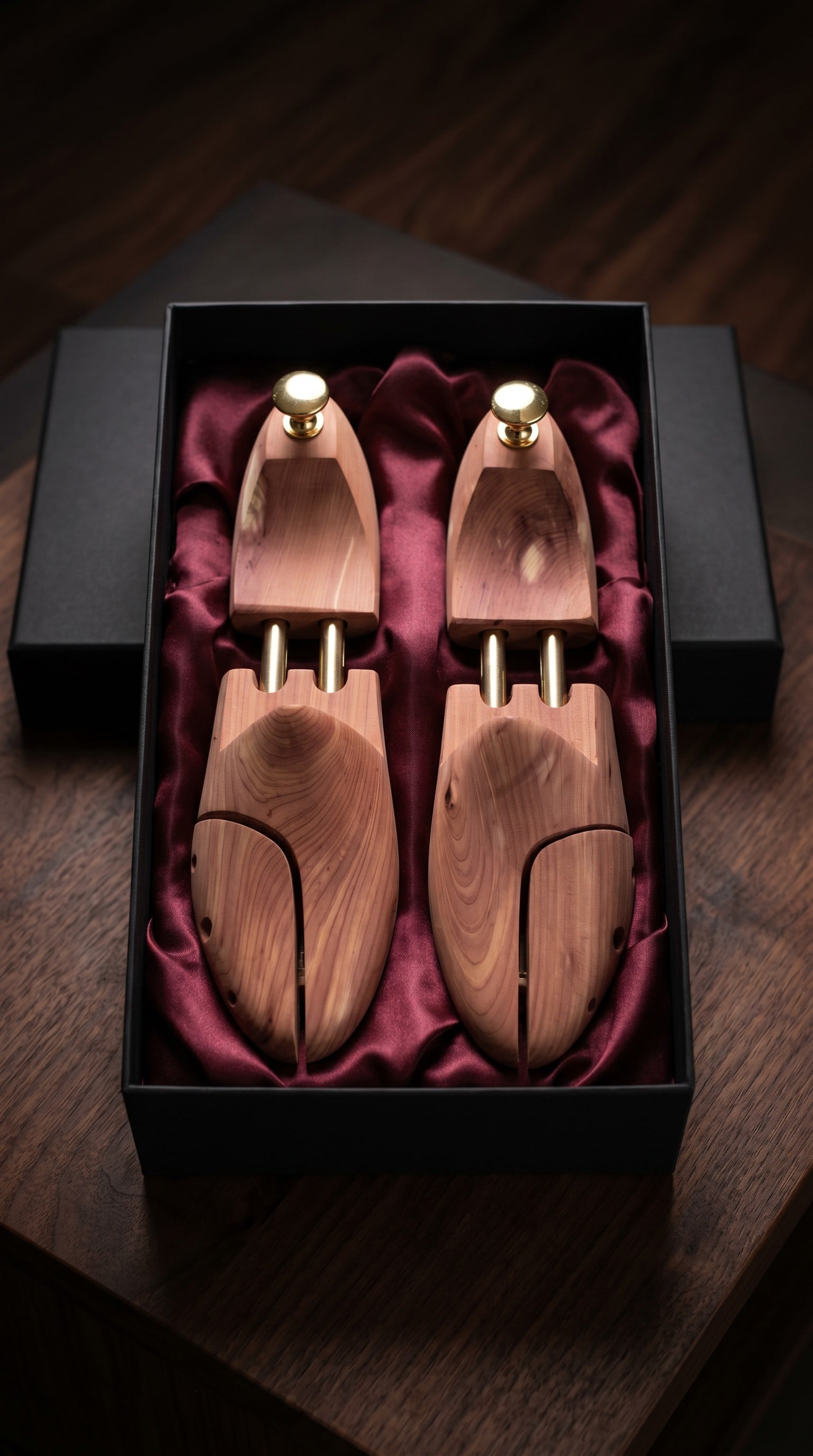
Core Wood Types and Their Functional Impact on Shoe Care
Cedar vs. Beech vs. Lime: Odor Control, Moisture Absorption, and Structural Support
The wood species used in a shoe tree directly dictates its ability to preserve footwear condition—specifically its capacity for odor control, moisture management, and structural support. Cedar, beech, and lime (often sold as basswood) each serve distinct roles based on their natural properties.
| Wood Type | Odor Control | Moisture Absorption | Structural Support |
|---|---|---|---|
| Cedar (aromatic red cedar heartwood) | Excellent – natural oils neutralize foot odors while imparting a crisp, woody scent | High – porous structure wicks sweat from linings quickly; unfinished cedar absorbs moisture deeply and releases it gradually | Good – medium density offers firm but not rigid support, ideal for everyday leather shoes |
| Beech | Moderate – lacks strong natural fragrance; relies mainly on ventilation | Moderate – denser than cedar, so absorption is slower but still effective for leather footwear | Excellent – high hardness and density allow beech to hold precise lasted shapes, making it the top choice for dress shoes and brogues needing crisp toe support |
| Lime (Basswood) | Mild – light, neutral scent; less effective at masking persistent odors | Low – soft and less porous; does not actively pull moisture, best reserved for shoes worn infrequently | Light – soft wood that molds gently with minimal pressure; suitable for delicate or casual footwear where heavy shaping is unnecessary |
Beyond species, the cut and finish significantly influence performance. Heartwood—sourced from the tree’s center—resists decay and retains more aromatic oils than sapwood. Unfinished, raw surfaces maximize moisture transfer, while lacquered or painted coatings nullify absorption entirely. Solid-wood construction is essential; compressed or veneered versions compromise durability and function. For optimal care, choose cedar for daily-wear shoes exposed to moisture and odor, beech for formal footwear requiring precise shape retention, and lime for travel or lightweight seasonal storage.
Shoe-Specific Wooden Shoe Tree Designs for Optimal Fit and Shape Retention
Split-Toe and 3-Piece Trees for Dress Shoes and Brogues
Split-toe wooden shoe trees use a two-part forefoot that expands laterally to match the unique toe-box shape of dress shoes, preventing leather collapse and minimizing crease formation across the vamp. The 3-piece construction—comprising heel, forepart, and a spring-loaded core—distributes tension evenly to maintain the shoe’s original lines without stretching, while the core accommodates slight length variations for a snug, adaptive fit. A 2021 study by a footwear preservation institute found that split-toe cedar trees reduced permanent toe creasing by 52% compared to shoes stored without trees. For brogues, where decorative perforations can distort if the leather sags, full toe-cap support is critical. Cedar’s natural oils also inhibit bacterial growth, helping keep shoes fresh after repeated wear. While lasted trees offer a custom fit, a correctly sized generic split-toe wooden tree delivers excellent protection—especially when inserted immediately after wear. This simple habit can extend shoe life by up to 40%, according to a leading shoe care survey, and keeping the sole flat prevents toe curling.
Contoured Heel Cups and Flexible Vamp Profiles for Boots and Casual Footwear
Contoured heel cups and flexible vamp profiles adapt wooden shoe trees for boots and casual footwear. In boot trees, an extended shaft supports the ankle, preventing slouching and collar deformation. A deep, molded heel cup cradles the counter to preserve its shape and prevent collapse. Cedar absorbs excess moisture from wet-weather wear, while a flexible forefoot mimics the foot’s natural flex point—reducing stress on the vamp. For casual shoes like trainers, a softer vamp profile maintains the toe box’s original curve without over-stretching fabric or leather. A 2022 study by a footwear ergonomics lab found that using a contoured boot tree retained 93% of the boot’s original shaft height after six months, versus 68% without support. Insert the tree after each wear and let the cedar wick moisture overnight—this routine can double the usable life of heritage boots. Proper fit is crucial: avoid forcing a tree that’s too long, as it risks distorting the heel.
Precision Sizing and Fit Metrics for Effective Wooden Shoe Tree Performance
Foot Measurement vs. Shoe Size: When to Rely on Each for Long-Term Shoe Integrity
A wooden shoe tree’s size is commonly selected using shoe size ranges (e.g., 8–9.5), but internal volume—determined by foot length, arch, instep height, and width—is what truly governs fit and effectiveness. A tree that’s too small shifts inside the shoe and fails to reduce creasing; one that’s too large stretches leather over time. For generic spring-loaded trees, compress and insert until it fills the shoe snugly, leaving no gaps at the heel or toe. Yet shoe size alone ignores last shape. A lasted wooden shoe tree—replicated from the original last—matches the foot’s engineered dimensions and delivers superior contour support. Therefore, when your shoe fits your foot correctly, a tree sized to the shoe’s nominal range will maintain moisture absorption and shape integrity. For high-volume feet or handcrafted shoes, prioritize internal volume over nominal size. Use shoe size for initial selection, but verify fit: the tree should preserve the shoe’s silhouette without applying pressure. For long-term integrity, consistent, even contact is key—the tree must fill both the toe box and heel cup uniformly to counter daily creasing. When in doubt, compress the tree lengthwise and slide it in; a well-fitted tree stays firmly in place without forcing the spring.
Value Assessment: Balancing Cost, Durability, and Proven Benefits of Wooden Shoe Trees
Evaluating a wooden shoe tree’s worth goes beyond its initial price tag. Entry-level models ($15–$30) typically use unvarnished cedar to absorb moisture and control odor—ideal for shoes under $200. Premium options ($25–$50) often feature ventilated toe slots and fuller heel blocks, enhancing shape retention for high-end footwear. Plastic alternatives, while inexpensive, fail to wick perspiration and can trap bacteria—accelerating leather degradation.
The real return lies in longevity. A quality pair of wooden shoe trees—costing about $35—can extend the wearable life of leather uppers from an average three years to three decades. When amortized over thousands of extra wears, the per-use expense becomes negligible. Choosing unvarnished cedar over varnished or synthetic materials ensures continuous moisture management and resistance to mildew—preserving both structural integrity and aesthetic appeal. In durable, well-crafted designs, a modest upfront investment delivers outsized protection, transforming a simple accessory into an essential, value-driven tool for any serious shoe care routine.
FAQ
What is the best wood for shoe trees?
Cedar is widely regarded as the best wood for shoe trees due to its odor-neutralizing properties, high moisture absorption, and moderate structural support.
Why does heartwood matter in shoe tree construction?
Heartwood retains more aromatic oils and resists decay, optimizing the shoe tree’s ability to absorb moisture and control odors.
How do split-toe shoe trees help dress shoes?
Split-toe shoe trees provide lateral expansion to match toe-box shapes, reducing creasing and preserving the shoe’s original design.
Can shoe trees prevent boots from collapsing?
Yes, boot trees with extended shafts and contoured heel cups prevent slouching and collar deformation, especially for heritage boots.
Are plastic shoe trees effective?
Plastic shoe trees are inexpensive but fail to absorb moisture and can trap bacteria, accelerating leather degradation.