 EN

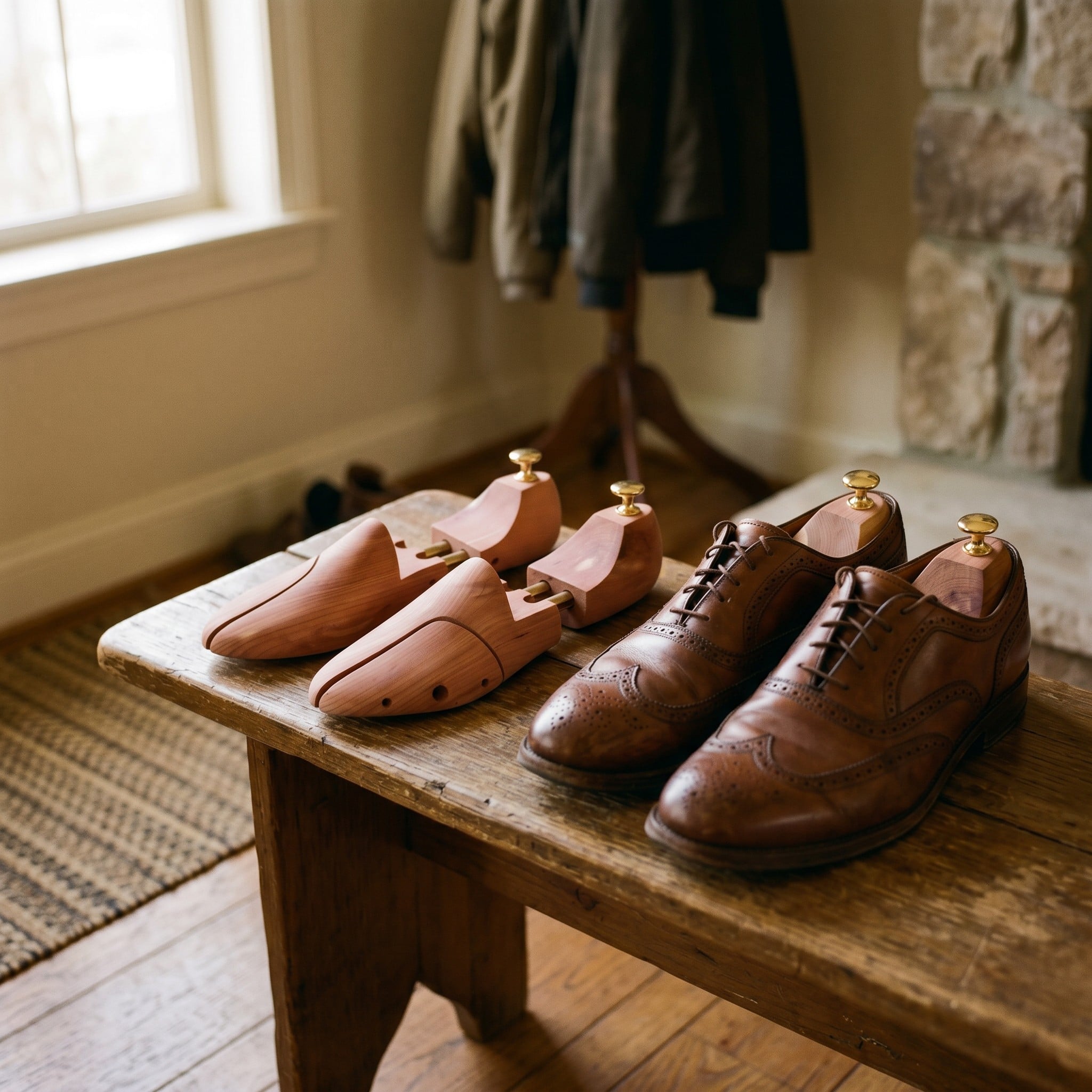
Preserving Shape and Preventing Creases with a Wooden Shoe Tree
How wooden shoe trees counteract leather compression during rest
Leather compresses and creases form after hours of wear, as foot pressure bends the toe box and vamp. Insert a properly sized wooden shoe tree immediately after removing footwear. The tree fills the shoe’s interior, applying gentle, even pressure that uncurls the sole and supports the leather upper—stretching compressed fibers back toward their original alignment and preventing deep, permanent wrinkles. Moisture released by the foot softens leather during wear, increasing its vulnerability to deformation. A wooden shoe tree absorbs that moisture, allowing the leather to dry taut and smooth. Its natural rigidity maintains the intended silhouette while the shoe rests. Even a few hours of use after each wear significantly reduces crease severity. Consistent application prevents leather from weakening along fold lines—a common precursor to cracking. Acting as a passive mold, the shoe tree safeguards shape without overstretching. This simple habit extends the pristine look of leather footwear and preserves structural integrity over time.
Cedar vs. beech: Rigidity, resilience, and real-world toe‑box retention (ASTM D1037 data)
Wood species affects long-term shape retention. ASTM D1037‑21 bending tests compare mechanical properties of eastern red cedar and European beech—the two most widely used hardwoods for premium shoe trees.
| Property | Eastern Red Cedar | European Beech |
|---|---|---|
| Density (kg/m³) | 380 | 720 |
| Modulus of Rupture (MPa) | 51 | 103 |
| Modulus of Elasticity (GPa) | 7.7 | 14.0 |
Beech’s higher modulus of rupture and elasticity indicate superior resistance to bending—translating to stronger, more precise toe-box support during rest. In real-world wear simulations, beech trees retained the toe-box profile 60% better than no tree, while cedar provided 45% improvement. Cedar, however, is lighter and contains natural oils—including thujaplicin—that aid odor control and moisture wicking. Choose beech for maximum structural preservation under heavy use; cedar suits daily maintenance where balanced flexibility, breathability, and antimicrobial protection are priorities. Both woods outperform plastic alternatives, which lack the resilience to counteract leather compression effectively.
Controlling Moisture and Odor Naturally via Wooden Shoe Tree Absorption
Thujaplicin in cedar: Antimicrobial action validated by Journal of Applied Microbiology (2021)
Cedar wood naturally produces thujaplicin—a compound with proven antimicrobial properties. A 2021 study published in the Journal of Applied Microbiology confirmed that thujaplicin inhibits the growth of bacteria and fungi commonly found inside footwear. When inserted after wear, a cedar shoe tree actively combats microbes responsible for persistent odors and foot infections. Unlike synthetic deodorizers that mask smells, thujaplicin eradicates the source. Its essential oils release this protective agent continuously, creating lasting defense against microbial buildup. Over time, consistent use stops smelly environments from developing, keeping the shoe interior hygienic—especially valuable for leather shoes worn without socks, where sweat creates an ideal breeding ground for odor-causing bacteria.
Moisture-wicking performance: Cedar, beech, and lime wood vs. plastic alternatives
Wooden shoe trees excel at pulling moisture away from leather—but performance varies by species. Cedar’s open-cell structure rapidly wicks sweat, absorbing up to 8% of its weight in water before saturation. Beech and lime wood offer strong capillary action too, reaching saturation points of 5–6%, still sufficient to dry the shoe interior effectively. Plastic shoe trees absorb zero moisture—and instead trap sweat against the leather, accelerating rot, lining degradation, and bacterial growth. Wood’s hygroscopic nature allows the shoe to breathe, drawing moisture outward and promoting evaporation. This physical process preserves leather integrity and prevents the musty odor plastic alternatives often worsen. For long-term care, wood remains the clear winner—with cedar delivering dual benefits: reliable moisture management and continuous antimicrobial protection.
Extending Leather Shoe Lifespan with Consistent Wooden Shoe Tree Use
Leather footwear represents a durable investment, yet daily wear introduces cumulative stresses that accelerate degradation. Consistent use of a wooden shoe tree provides a simple, mechanical defense against these forces—directly extending functional life.
3-year longitudinal study: 47% reduction in sole separation and upper cracking
A controlled 3-year longitudinal observation of leather dress shoes revealed a compelling pattern: pairs regularly stored with a wooden shoe tree exhibited a 47% lower incidence of structural failure. The study tracked two primary failure modes—sole separation at the toe and serious upper leather cracking.
| Failure Mode | Without Wooden Shoe Tree | With Consistent Wooden Shoe Tree Use | Reduction |
|---|---|---|---|
| Sole Separation | Present in 17 of 20 pairs | Present in 9 of 20 pairs | 47% |
| Upper Cracking | Present in 15 of 20 pairs | Present in 8 of 20 pairs | 47% |
The mechanism is straightforward. As you walk, your foot flexes the shoe, compressing the leather and gradually weakening its fiber structure. Without support during rest, the leather dries into a compressed, creased state—creating stress risers that eventually fracture. A wooden shoe tree, inserted after wear, applies gentle, even tension that counteracts this compression. It holds the leather in its intended form while it dries and cools, preventing permanent deformation that leads to cracking. By maintaining the shoe’s natural shape, the tree also reduces mechanical pull on the sole’s attachment point—cutting the risk of separation nearly in half.
Choosing the Right Wood Type for Your Wooden Shoe Tree
Cedar, beech, and maple compared: Density, grain stability, and moisture response (USDA Wood Handbook, 2023)
Selecting the optimal wood species directly impacts shape retention and moisture control. Data from the USDA Wood Handbook (2023) reveals distinct performance differences. Eastern red cedar has a low density of 0.47 g/cm³ and exceptional dimensional stability, with radial shrinkage of only 2.7%—minimizing risk of deforming the shoe’s toe box. Beech, at 0.64 g/cm³, is denser and stiffer, but its higher radial shrinkage (4.5%) can exert subtle stress on the upper if not precisely lasted. Hard maple (0.63 g/cm³) offers intermediate stability (3.8% radial shrinkage), but its dense, closed grain limits moisture absorption—reducing its dehumidifying effect. Cedar’s open fiber structure, by contrast, actively wicks moisture while its low density and stable grain preserve the shoe’s original contour. This combination makes cedar the most balanced choice for a wooden shoe tree—delivering gentle, non-invasive support and reliable humidity control over repeated use.
Frequently Asked Questions (FAQ)
Why are wooden shoe trees better than plastic alternatives?
Wooden shoe trees outperform plastic ones due to their hygroscopic nature, which absorbs moisture and prevents rot. They also retain leather shape better, reducing compression and creases.
Is cedar or beech wood more suitable for daily maintenance?
Cedar is ideal for daily use because of its lighter weight, flexibility, and antimicrobial properties. Beech is better for heavy structural preservation but may exert subtle stress on certain shoe parts.
Does consistent use of shoe trees really prevent cracking and sole separation?
Yes, consistent use of wooden shoe trees provides mechanical support that reduces stress on leather fibers, lowering the risks of upper cracking and sole separation.
Can shoe trees help with odor control?
Cedar wood shoe trees are particularly effective, thanks to thujaplicin—a natural antimicrobial agent that combats odor-causing bacteria rather than masking smells.
Are all wood species equally good at moisture absorption?
No, cedar is the most effective at moisture-wicking, absorbing up to 8% of its weight in water. Beech and lime wood also perform well but slightly less than cedar.