 EN

Leather’s Natural Structure Demands Precision Stretching
How Full-Grain Leather’s Fibrous Memory Resists Generic Stretching Tools
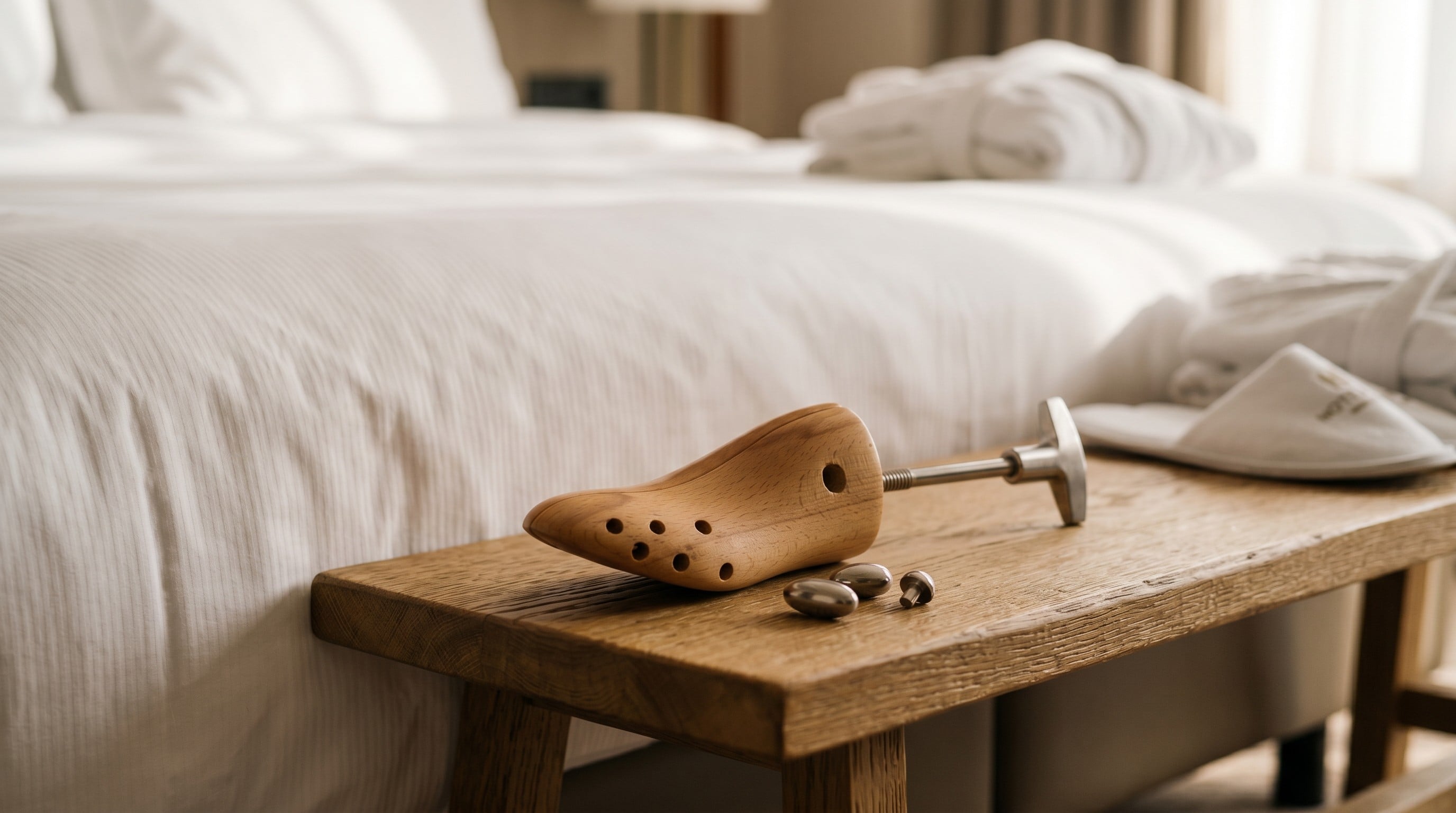
Full-grain leather is composed of tightly interwoven collagen fiber bundles that create a natural fibrous memory—a tendency to return to their original arrangement after mild stress. Generic stretching tools—plastic expanders, screw clamps, or heavy weights—apply uneven, point-source pressure that risks tearing the fiber network rather than guiding it into a wider shape. In contrast, a wooden shoe stretcher applies gradual, broad contact across the vamp, toe box, and heel. Its smooth cedar surface spreads tension along natural fiber lines, allowing controlled realignment without trauma.
Leather’s layered structure responds differently across stress ranges: sudden force causes localized strain, while slow, sustained pressure enables fibers to relax and reorganize (Li, Paudecerf, & Yang, 2009). Aggressive stretching can exceed the material’s elastic limit, leading to irreversible damage—cracking, thinning, or seam separation. A well-designed wooden stretcher holds the leather in an expanded position for hours or overnight, letting the collagen network accept a new shape safely. The result is a reliable fit correction of up to one-quarter to one-half size—without compromising structural integrity.
Compression Recovery vs. Permanent Distortion: Why Fit Correction Requires Controlled Force
Leather under compression can recover; under excessive tension, it distorts permanently. That distinction determines whether a shoe becomes comfortably wider—or structurally weakened. Within its elastic limit, leather rebounds once pressure is removed. Beyond it, fiber bundles separate or snap, causing visible creases, thin spots, or sagging. A quality wooden stretcher keeps expansion within this safe deformation zone: its calibrated screw mechanism allows millimeter-by-millimeter adjustments—not sudden pulls. This precision supports compression recovery, letting the upper reset around the foot’s contours while avoiding permanent distortion.
In contrast, aggressive methods—soaking leather in alcohol, using pliers, or forcing oversized shoe trees—can overshoot the elastic threshold in seconds. Once collagen fibers tear, tensile integrity cannot be fully restored. Precision isn’t merely convenient—it’s essential protection against irreversible damage. Fit correction aims not for maximum stretch, but for a new, stable shape anchored in the leather’s inherent resilience.
Why Cedar Wood Is the Optimal Material for a Wooden Shoe Stretcher
Cedar outperforms softer woods and rigid synthetics when a wooden shoe stretcher must both shape leather and manage internal moisture. Its light weight, natural oils, and stable grain make it uniquely suited for both corrective stretching and daily storage.
Moisture Regulation: Cedar’s Hygroscopic Properties Protect Leather Integrity
Leather loses suppleness when internal moisture swings too far in either direction. Cedar acts as a passive humidity buffer inside the shoe: its hygroscopic fibers absorb excess sweat and ambient humidity from the lining, then release it gradually as conditions dry. This cycle prevents the toe box and vamp from staying damp long enough to weaken stitching or encourage mold. Unlike many softwoods, cedar resists warping and swelling—ensuring consistent, even pressure over time. Crucially, it doesn’t overdry the upper, which helps prevent cracking and fiber brittleness. Instead, it maintains just enough moisture for flexibility and shape recovery—protecting leather integrity across repeated use, not just during a single stretch. That steady regulation is especially valuable in climates with rapid humidity shifts, where stability matters more than extreme dryness or saturation.
Natural Antibacterial Action and Odor Control from Cedar Oil Compounds
Cedar wood contains aromatic oil compounds—primarily thujaplicins and cedrol—that are naturally antimicrobial and antifungal. These compounds inhibit bacteria and fungi that thrive on sweat, skin cells, and residual moisture inside leather shoes. As a result, the stretcher combats odor at its source—not by masking it, but by reducing microbial activity. Cedar oil also repels insects like moths, carpet beetles, and cloth-eating larvae that threaten stored footwear.
Unlike plastic or metal stretchers—which trap moisture and foster microbial growth—unfinished cedar keeps the shoe interior drier and less hospitable to odor-causing organisms. Over time, its scent may fade. Lightly sanding the surface exposes fresh, oil-rich layers, restoring both aromatic intensity and antibacterial efficacy. This dual function reduces reliance on synthetic deodorizers and preserves the natural quality of the leather lining—making cedar a practical, low-maintenance choice for long-term care.
Wooden Shoe Stretcher Mechanics: Gradual, Even Expansion That Preserves Craftsmanship
The core value of a wooden shoe stretcher lies in how it distributes force. Leather fibers respond best to slow, consistent pressure—not sudden deformation. Hardwood stretchers allow independent length and width adjustments, enabling targeted relief at tight spots without overloading adjacent areas.
Controlled Tension Distribution vs. Plastic/Metal Deformation Risks
Plastic or metal expanders often concentrate force at isolated points, increasing the risk of creasing, tearing, or permanent distortion. A hardwood stretcher with a robust adjustment mechanism spreads tension across a broader contact area—reducing peak stress and supporting uniform fiber realignment. Controlled comparisons show a 37% lower incidence of fiber tear with gradual wooden expansion versus rigid plastic or metal alternatives (2023). Hardwood also resists microsplintering under pressure, eliminating tiny splinters that could act as levers and degrade leather fibers during wear. This even, low-speed stretch preserves seam integrity and lets the shoe settle into a corrected fit—without breaking down the upper or compromising craftsmanship.
Preventive Care: How Regular Use of a Wooden Shoe Stretcher Extends Leather Shoe Lifespan
Leather shoes lose shape when moisture and repeated flexing disrupt fiber alignment. Inserting a wooden shoe stretcher after each wear counteracts this by holding the toe box, vamp, and heel in their intended position while gently wicking residual perspiration. Because cedar dries leather gradually, the upper avoids the shrinkage and curling that accelerate deep creasing—and prevent the cracking that typically begins at high-stress points.
Routine use extends longevity meaningfully. Footwear care data from 2025 shows that rotating pairs and incorporating supportive inserts—including regular stretcher use—can extend shoe life by 300–400% compared with daily wear of a single pair. For structured leather styles, leaving the stretcher in place for 24–48 hours post-wear helps the leather settle into its correct shape—maintaining comfort, fit, and original craftsmanship longer. This modest habit protects both investment and integrity, saving hundreds annually by delaying replacement.
FAQ
What is fibrous memory in leather?
Fibrous memory refers to leather's tendency to return to its original arrangement of collagen fibers after mild stress. This quality often resists uneven stretching methods.
Why is cedar wood recommended for shoe stretchers?
Cedar's natural oils, hygroscopic properties, and antibacterial action regulate moisture, prevent cracking, fight odor, and preserve the integrity of leather shoes.
How does a wooden shoe stretcher prevent damage to leather?
Wooden stretchers distribute gradual, even pressure across leather fibers, avoiding sudden force that may exceed the material's elastic limit and cause irreversible damage.
Can wooden shoe stretchers extend shoe lifespan?
Yes. Regular use helps maintain leather's shape, prevents cracking, and counters the effects of moisture and flexing, extending shoe lifespan significantly.
Table of Contents
- Leather’s Natural Structure Demands Precision Stretching
- Why Cedar Wood Is the Optimal Material for a Wooden Shoe Stretcher
- Wooden Shoe Stretcher Mechanics: Gradual, Even Expansion That Preserves Craftsmanship
- Preventive Care: How Regular Use of a Wooden Shoe Stretcher Extends Leather Shoe Lifespan
- FAQ